
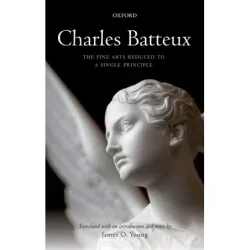
Description
The Fine Arts Reduced to a Single Principle (1746) by Charles Batteux was arguably the most influential work on aesthetics published in the 18th century. James O. Young presents the first complete English translation of the work, with full annotations and a comprehensive introduction, which illuminate Batteux’s continuing philosophical interest. CONTENTSAcknowledgementsTranslator’s IntroductionEpistle DedicatoryPrefacePart One: Where we establish the nature of the arts by reference to the genius that produced them1 Division and origin of the arts2 Genius is only able to produce the arts by imitationwhat imitation is3 Genius must not imitate reality just as it is4 The state genius must be in to imitate belle nature5 On the manner in which the arts imitate6 Why eloquence and architecture differ from the other artsPart Two: Where we establish the principle of imitation by reference to nature and the laws of taste1 What taste is2 The subject of taste can only be nature3 Evidence drawn from the history of taste4 The purpose of the laws of taste is to imitate belle nature5 Second general law of taste: belle nature must be imitated well6 There are particular rules for each artwork and taste finds them only in nature7 Conclusion I. There is only one general type of good taste, but several particular types8 Conclusion II: Since the arts are imitators of nature, they must be judged by comparison to it9 Conclusion III: Taste for nature and a taste for the arts being the same, there is only one taste that applies to everything, even to manners10 Conclusion IV: How it is important to form taste in a timely manner and how we should go about forming itPart Three: In which the principle of imitation is verified by its application to various artsSection One: Poetical art consists in the imitation of belle nature1 Alternatives to the principle of imitation are refuted2 The divisions of poetry are found in [types of] imitation3 The general rules of poetical content are contained in the principle of imitation4 The rules of poetical style are contained in the imitation of belle nature5 All rules of epic poetry come from the principle of imitation6 On tragedy7 On comedy8 On pastoral poetry9 On fables10 On lyric poetrySection Two: On PaintingSection Three: On Music and Dance1 Gestures and tones of voice are the keys to understanding music and dance2 The emotions are the principal subject of music and dance3 All of music and dance must have a referent and a meaning4 The expressive qualities that music and dance must have5 On the union of the fine artsYoung, James O. – Charles Batteux: The Fine Arts Reduced to a Single Principle
Reviews
There are no reviews yet.